- Ethiopia inaugurates $5bn Grand Renaissance Dam, Africa’s largest hydro project
- Facility expected to double Ethiopia’s electricity supply
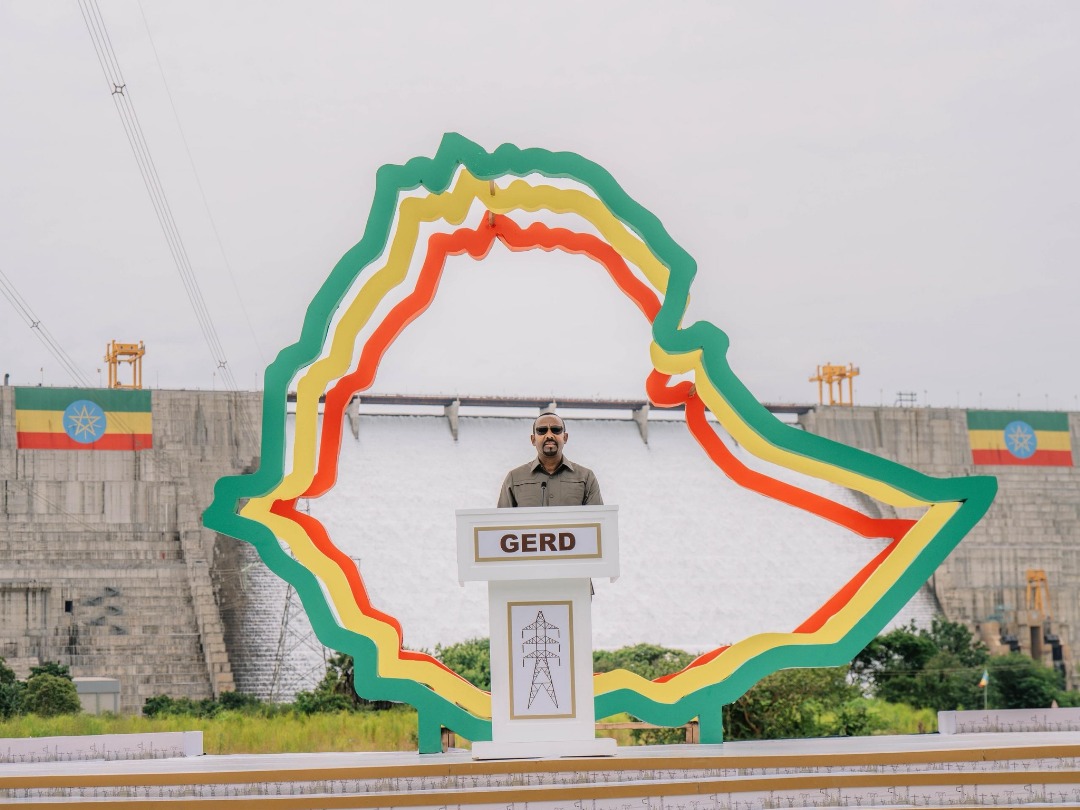
ADDIS ABABA, ETHIOPIA – Ethiopia has inaugurated the $5 billion Grand Ethiopian Renaissance Dam (GERD), Africa’s largest hydroelectric project.
The 5,150-megawatt facility, with 13 turbines, is set to nearly double Ethiopia’s electricity supply and unlock more than $1 billion annually in export revenues.
Prime Minister Abiy Ahmed hailed it as a generational feat, declaring: “Today, we were able to become the generation chosen by God to make history,” likening the achievement to Ethiopia’s 1896 victory at Adwa.
The inauguration at Guba, along the Blue Nile, drew regional leaders including Kenyan President William Ruto, Somali President Hassan Sheikh Mohamud, Djiboutian President Ismaïl Omar Guelleh, and South Sudan’s Salva Kiir. Ruto praised the dam as “more than an infrastructure project; it is a continental symbol of progress,” while Kiir called it “a symbol of unity, sacrifice, and commitment.”
Built without foreign financing – after international lenders stayed away due to disputes over Nile waters – the dam was funded largely through domestic bonds, donations, and grassroots contributions from farmers, students, and civil servants. Abiy described the effort as a “nation’s collective sacrifice.”
The GERD has already expanded electricity exports to Sudan, Djibouti and Kenya, while South Sudan signaled readiness to sign a power deal. Kenya also expressed interest in tapping Ethiopian power to drive its ICT and agro-processing industries.
For a country that has spent more than $18 billion over decades importing fuel, green energy exports offer a way to ease chronic dollar shortages, improve trade balances, and reduce external vulnerability.
Contested waters
Downstream countries Egypt and Sudan remain alarmed about the dam’s potential impact on Nile water flows. While the African Union has urged negotiations under the 2015 Khartoum Agreement on Principles, no final deal has been reached.
Analysts say the GERD is both a milestone and a gamble for Ethiopia. “GERD marks a turning point,” said Silabat Manaye, a Nile politics expert.
“It is not the end of the journey, but the beginning of Ethiopia’s new chapter in energy, development, and unity. If leveraged well, the dam could stabilise the economy, attract new investment, and shift the balance of power in the region.”
Whether GERD emerges as a beacon of prosperity or a flashpoint for renewed conflict, Manaye added, will depend on how “Ethiopia balances megawatts with diplomacy.”