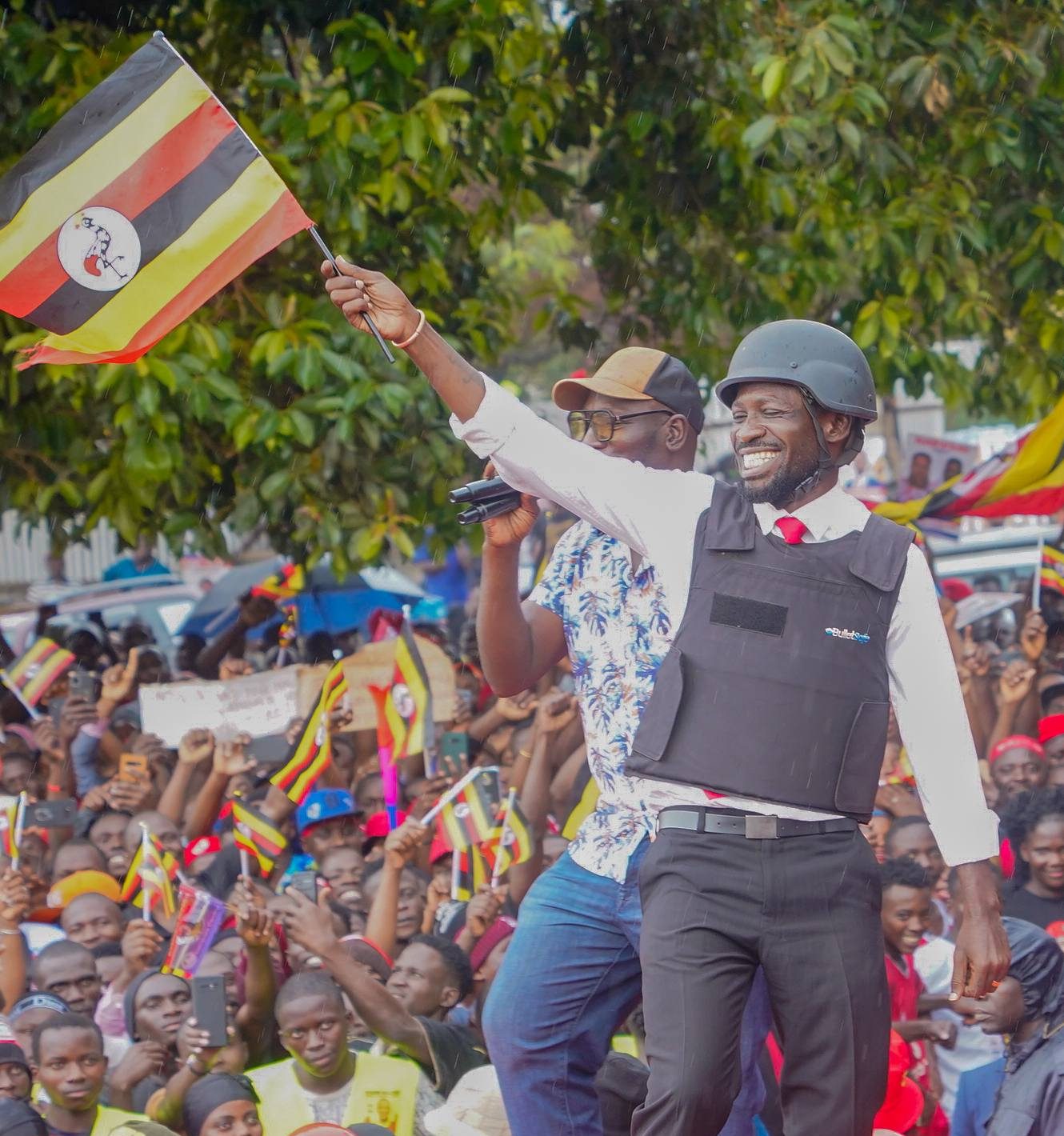
After a disputed election in January won by long time ruler Yoweri Museveni, his home was besieged by soldiers, and he managed to escape with the help of his supporters. He fled to the US.
Before politics, Bobi Wine was known as a musician. He is one of east Africa’s major artists, having built a huge fan base with his socially conscious reggae and dancehall songs.
During his recent tour of Harvard University, where he met students and members of the Ugandan diaspora, I had the opportunity to talk with him. As a scholar of African literature, I was keen to know about the stories and ideas that sustain his conviction.
Listening to him was a reminder that political imagination is often rooted in artistic and intellectual traditions. He continues to draw on some of these traditions as he navigates the demands of public life.
Tinashe Mushakavanhu: You come from Kampala, a city that was once a gathering place for African writers and intellectuals. Which writers – Ugandan, African, or beyond – have most influenced your thinking?
Bobi Wine: (Nigerian novelist) Chinua Achebe’s Things Fall Apart. It was the first book I ever read cover to cover, and it made me fall in love with African writers. I was also inspired by writers like (Kenyan author and academic) Ngũgĩ wa Thiong’o, and (Ugandan surgeon and author) Tumusiime Rushedge.
Of course, I must add that we do not have that same space anymore, because many of our writers face repercussions. Recently, a great writer called Joe Nam was gunned down in his house after he published a book called The Day Museveni Goes: Reflections, Questions, Fears, Hope. We strongly believe it was because of the book.
Dr Olive Kobusingye’s book The Correct Line? Uganda Under Museveni was also banned. She is sister of the opposition stalwart Kizza Besigye.
So it is tough. I mean, you cannot find these works anywhere, but the revolutionary and stubborn spirit keeps leading us to where we want to go, and keeps us giving all we have, even when we might otherwise have given up. It keeps us speaking even when it is dangerous.
And also, online has helped a great deal, people can now get books from the internet. Writers have been constantly targeted and killed, and this goes back to the days of Idi Amin, when writers were brazenly persecuted and killed. I was, and will continue to be, influenced by great writers and great books.
Tinashe Mushakavanhu: You studied theatre; who are your favourite playwrights?
Bobi Wine: My favourite playwrights include (Nigeria’s) Wole Soyinka and all my teachers at Makerere.
Tinashe Mushakavanhu: As a graduate of Makerere University in Uganda, home to the historic 1962 Conference of African Writers of English Expression, how do you see yourself in relation to that literary legacy? Are there Ugandan writers whose work you feel particularly connected to today?
Bobi Wine: Today, it is not only about writers and literature; it has largely broadened. It is about poets, comics, visual artists, singers, and especially rappers, who are the philosophers of the people.
I always wanted to be a writer myself, but studying our people taught me something: they don’t read as much as before – they listen, they dance, they gather around sound. So I meet them where they are, in the studio, on the stage, on the dance floor, and that’s where I deliver my message.
Tinashe Mushakavanhu: Is there a book or books you find yourself returning to, one that continues to offer new meaning at different moments in your life; perhaps one that is always in your carry-on bag or on your bedside table?
Bobi Wine: Betrayed by My Leader, written by John Kazoora, one of (Ugandan president Yoweri) Museveni’s former comrades, who also died under suspicious circumstances. He writes about the hope and disappointment of the armed struggle that brought Museveni to power. He was a grounded man; he was a revolutionary. It is this book that touches me most deeply. It shows me the pain of trust, but also reminds me of what can happen.
Tinashe Mushakavanhu: As both a political leader and a musician, how do you see the relationship between music, literature and political expression in your work?
Bobi Wine: Music and literature are not separate, they move together. Historically, they go back to the days of slavery, the days of colonialism, the days of the armed resistance against dictatorship, music has always carried the message.
It is art, it is music, it is the recital of powerful ideas and spoken word that carries memory, protest and truth. It is the most effective way of carrying messages from one generation to another, from one group to another, from one region to another. So you can’t separate them.
No wonder art is now also being used against the people, to the extent that artists are bought and paid for. They’re compromised to change their values. I am a musician, and my music is banned in Uganda. Why? Because of the effectiveness of music.
Tinashe Mushakavanhu: Finally, if you were to create a short playlist to accompany a reading list – songs that speak to the same themes as the books that inspire you – what would be on it?
Bobi Wine:
Three Little Birds – Bob Marley
Buffalo Soldier – Bob Marley
Soweto (Say No to Apartheid) – Peter Tosh
Everything is Gonna Be Alright – Bobi Wine
Freedom – Bobi Wine
They Don’t Care About Us – Michael Jackson
Gimme Hope Jo’anna – Eddie Grant
Tinashe Mushakavanhu, Assistant Professor, Harvard University
This article is republished from The Conversation under a Creative Commons license. Read the original article.