- Namibia clears second Eurobond issued in 2015
- Local banks bridge $306mn funding gap amid slowing growth
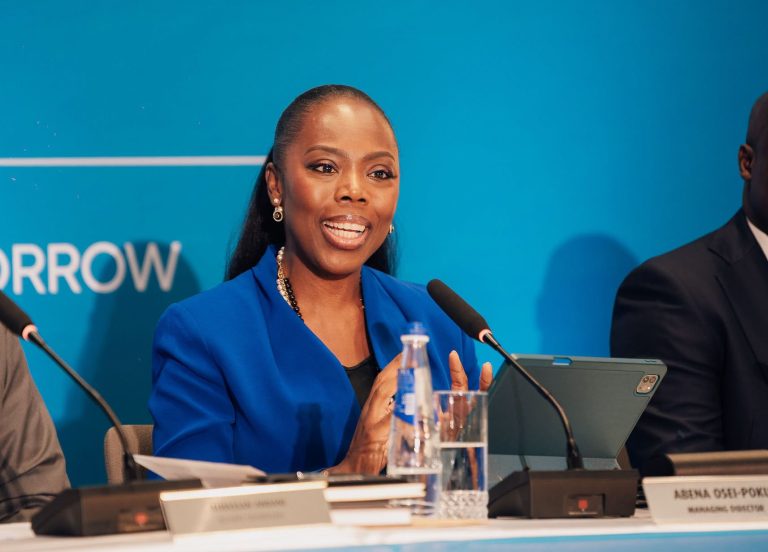
WINDHOEK, NAMIBIA – Namibia has fully redeemed its $750 million Eurobond, marking a major milestone in the country’s decade-long engagement with global capital markets, Finance Minister Ericah Shafudah announced on Wednesday.
“In 2015, Namibia entered the international capital markets for the second time with the issuance of a US$750 million Eurobond at a coupon of 5.25%, which will be redeemed today,” Shafudah told a packed audience at the Bank of Namibia headquarters.
She described the redemption as proof of Namibia’s growing financial maturity. “Engaging with international capital markets serves as a testament of Namibia’s readiness to navigate its own future, reinforcing our confidence as a nation dedicated to sustainable progress,” she said.
Eurobonds and Africa’s financing outlook
Bank of Namibia Governor Johannes !Gawaxab said Namibia’s successful redemption reflected prudent debt management in a challenging environment. “Countries issue Eurobonds to support their development agendas, their balance of payments, and their budgets,” he said.
Between 1997 and 2023, 19 African nations issued 91 Eurobonds, led by Egypt (22), Nigeria (12), and both South Africa and Ghana (10 each). “Eurobonds are an important asset class,” !Gawaxab noted. “For many investors, they offer relatively attractive risk-return trade-offs and provide liquidity and transparency.”
Namibia’s economy grew 3.7% in 2024, though expansion is projected to moderate to 3.0% in 2025 due to weak global demand and a slowdown in the diamond and beef sectors. “We are redeeming our bond in a very de-inflationary period,” !Gawaxab said, describing macroeconomic management as “on sound footing compared with other countries.”
To meet its repayment obligations, Namibia drew $444 million from its sinking fund and raised the remaining $306 million from commercial banks, including Standard Bank (N$3 billion), FNB (N$1.5 billion) and Bank Windhoek (N$1.5 billion).
Some analysts likened the move to “borrowing from Peter to pay Paul,” while others said it showcased flexibility and confidence in local financial institutions.
Shafudah said Namibia’s debt structure remains resilient, with domestic debt now accounting for 85% of total obligations and foreign debt mostly denominated in South African rand, shielding it from exchange-rate risks.
According to the central bank, Namibia’s foreign reserves — projected to fall from N$63 billion at end-2024 to N$47 billion by end-2025 — remain sufficient to cover three months of imports, meeting international benchmarks.