ADDIS ABABA, ETHIOPIA – As Ethiopians prepare to vote, critics warn of instability. Yet supporters argue the country’s economic transformation and democratic progress tell a different story.
As Ethiopia heads into a landmark election, a fierce battle is unfolding not only at the ballot box but also over the country’s international image.
In recent months, several international media outlets and think tanks have sharply increased their scrutiny of Ethiopia and Prime Minister Abiy Ahmed. Criticism of the government is not new. What has drawn attention, however, is the timing of the latest wave of commentary: arriving just as Ethiopians prepare to participate in what supporters describe as one of the largest democratic exercises on the African continent.
More than 50 million Ethiopians have registered to vote, making the election one of the most significant in Africa’s recent political history. For many Ethiopians, that achievement alone deserves greater international recognition.
Supporters of the government argue that much of the external commentary overlooks the profound changes that have taken place across the country over the past eight years. They point to an economy that continues to expand, advances in food security, sweeping digital reforms in public services and finance, growing government revenues, and extensive urban renewal projects transforming Addis Ababa and other cities.
They also highlight the operationalisation of the Grand Ethiopian Renaissance Dam (GERD), which is beginning to generate electricity for Ethiopia and neighbouring countries, as well as ambitious plans to build what is projected to become Africa’s largest international airport. To them, these developments reflect a country undergoing rapid transformation rather than one teetering on the edge of collapse.
Democracy, development, and competing narratives
The campaign period leading to the June 1 election has been marked by extensive political engagement. Parties have debated openly across multiple media platforms, candidates have presented competing visions for the country’s future, and voters have been exposed to a wide range of political viewpoints.
Supporters say this demonstrates democratic competition functioning as it should. They acknowledge that scrutiny from international observers and media organisations is both legitimate and necessary. Constructive criticism, they argue, can strengthen democratic institutions and improve governance.
Their concern lies with what they see as a disproportionate focus on worst-case scenarios and predictions of instability, often at the expense of reporting on progress and reform. Many supporters contend that Ethiopia’s growing confidence in charting its own political and economic course unsettles some foreign observers accustomed to viewing the country through the lens of crisis.
Prime Minister Abiy’s backers argue that criticism of his leadership often extends beyond policy disagreements and reflects unease with Ethiopia’s determination to pursue reforms on its own terms. They see his administration as attempting to modernise state institutions while addressing long-standing structural challenges inherited over decades.
For them, the debate is ultimately about competing visions of Ethiopia’s future and the country’s capacity to shape that future independently.
Peace, security, and Ethiopia’s regional ambitions
Questions surrounding peace and security remain central to discussions about Ethiopia’s future. Supporters of the government reject portrayals of the country as facing widespread popular rebellion. Instead, they argue that many of the persistent armed conflicts are sustained by external actors, whose involvement complicates efforts to achieve lasting peace.
Particular attention continues to be paid to the implementation of the Pretoria Peace Agreement, which ended the devastating conflict in northern Ethiopia.
Government supporters describe the agreement as a landmark African-led peace initiative facilitated by the African Union. They argue that it provides a comprehensive framework for addressing accountability, truth-telling, reconciliation and constitutional governance.
Concerns have also emerged regarding tensions involving the Tigray People’s Liberation Front (TPLF), with supporters accusing the group of undermining aspects of the peace process through its regional alliances.
Despite these challenges, many Ethiopians remain committed to the country’s ongoing national dialogue process, which seeks to build consensus around governance reforms and address historical grievances through inclusive consultation rather than violence.
The government and its supporters argue that such processes require patience and should be allowed to evolve without excessive external interference. International investors appear to be taking a more optimistic view of Ethiopia’s prospects. Foreign capital continues to flow into key sectors, attracted by market reforms, infrastructure development, expanding digital services and access to affordable energy.
Supporters see this investor confidence as evidence that global businesses are responding to realities on the ground rather than alarmist forecasts. Regional diplomacy remains another area where competing narratives have emerged.
One frequently debated issue is Ethiopia’s desire for improved access to the sea. Supporters argue that the country’s concerns are rooted in economic and security considerations rather than military ambitions. They maintain that negotiated arrangements with neighbouring coastal states are both legitimate and achievable through diplomacy.
Similarly, disputes over the Nile continue to shape regional politics. Ethiopian officials and supporters insist that cooperation among riparian states remains possible and that international law provides a framework for equitable and mutually beneficial solutions.
Ultimately, supporters reject claims that Ethiopia is destined for renewed conflict or instability. They argue that such predictions underestimate both the resilience of the Ethiopian people and the country’s capacity to resolve its challenges through democratic processes and peaceful dialogue.
As millions prepare to cast their ballots, they believe the election represents not a crisis point but another chapter in Ethiopia’s long and often difficult journey towards political stability, economic development, and national renewal.
Whether the country’s critics or its supporters prove more accurate in their assessments will become clearer in the years ahead. For now, many Ethiopians remain convinced that their future will be determined not by foreign commentary, but by the choices they make themselves.
About the author:
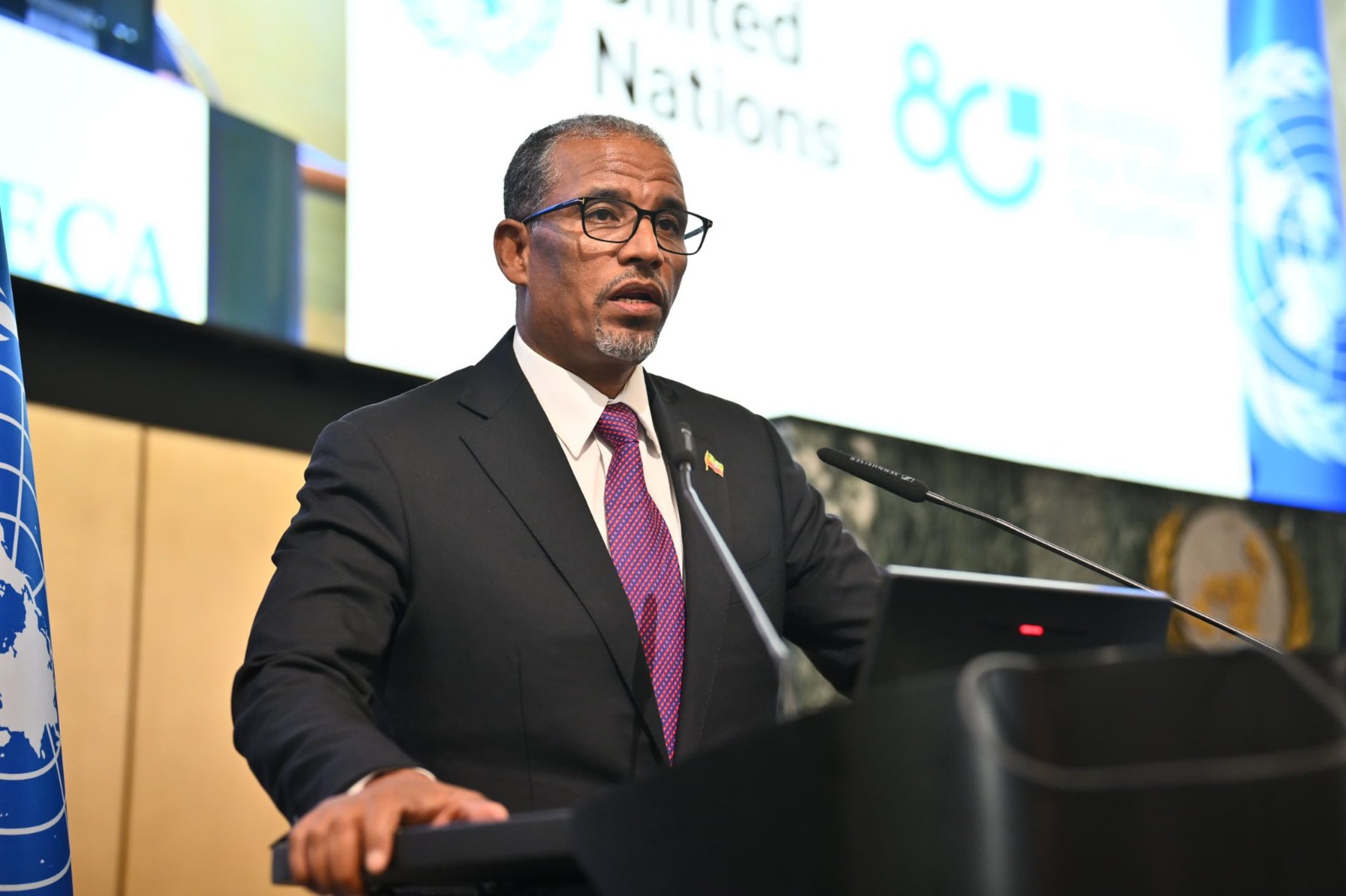
Ambassador Berhanu Tsegeye Abera has served as Ethiopia’s State Minister for Resource Management and Services at the Ministry of Foreign Affairs since April 2025. A veteran public servant and legal expert with more than 30 years of experience, he has held senior positions including Attorney General, State Minister of Justice and Ambassador to Djibouti, where he helped strengthen bilateral relations and advance Ethiopia’s strategic interests. He is widely recognised for his work in governance, institutional reform, criminal justice policy and public-sector modernisation.