- Ecobank resumes dividend after years of suspension
- Strong profits contrast with Nigeria’s persistent drag
LOME, TOGO – Ecobank has resumed dividend payments after years of suspension, but lingering risks – particularly in Nigeria – raise doubts about whether its recovery is truly sustainable.
For years, Ecobank Transnational Incorporated (ETI) told a familiar story to its shareholders. Annual meetings brought improved earnings and cautious optimism, only to end with the same conclusion: no dividend.
This article is free to read.
Sign up for free or sign in to continue
reading. Unlike our competitors, we don't force you to pay
to read the news but we do need your email address to
make your experience better.
Create your free account or sign in
That cycle has finally been broken.
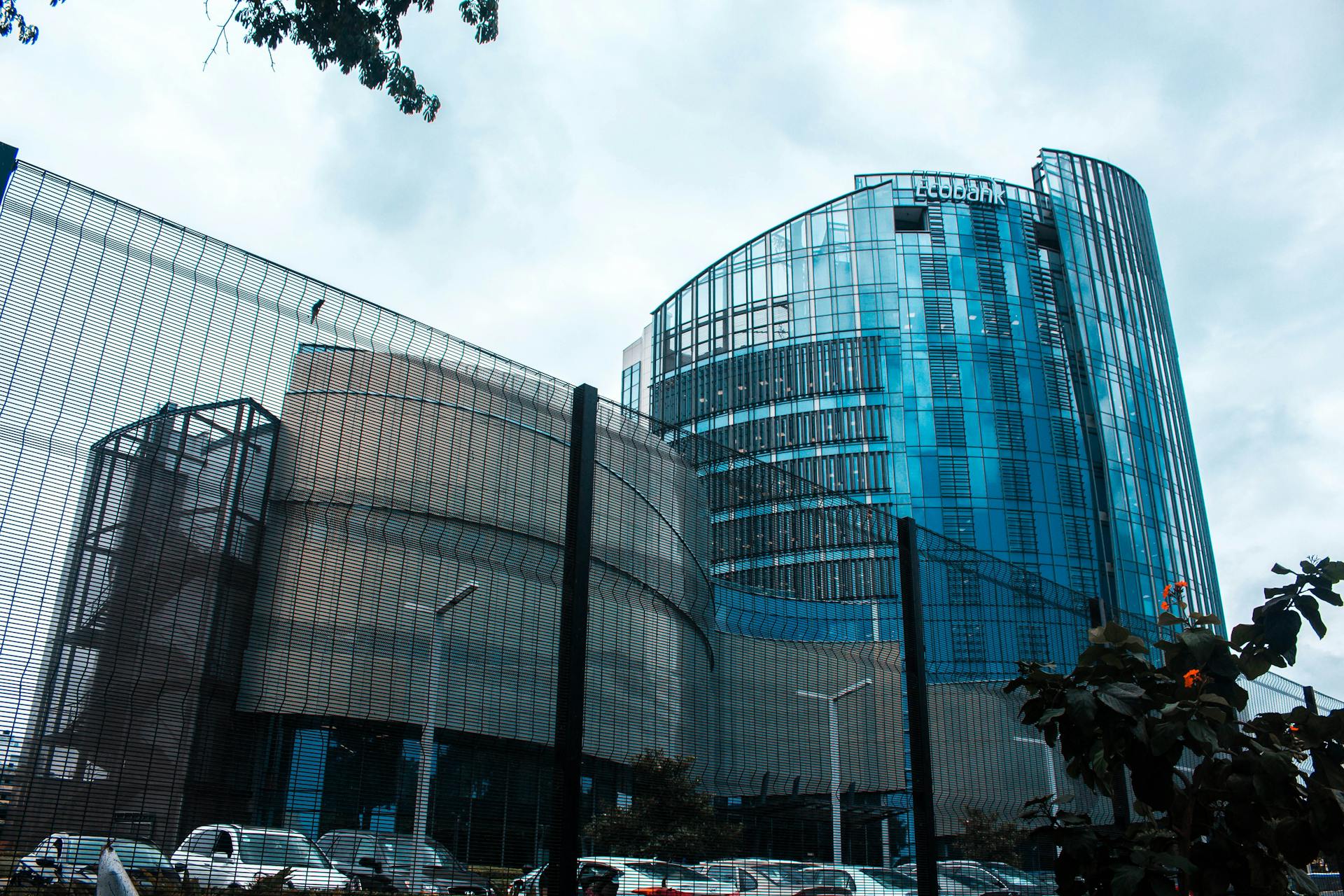
On April 14, the Lomé-headquartered pan-African lender, operating across 34 sub-Saharan African countries, recommended a $40 million dividend payout — its first since 2022 and only the third in a decade. The announcement came alongside its strongest financial performance since Jeremy Awori became chief executive in 2022: pre-tax profit of $801 million, up 21%, on revenues of $2.45 billion.
The market, however, had already anticipated much of this recovery.
Shares of ETI on the regional West African bourse had climbed sharply, closing at 34 CFA francs the day before the announcement — a 128% rise over the previous year. Investors had priced in the turnaround. What they had not yet seen was confirmation that the recovery would translate into returns.
Now, they have — but only just.
The dividend, set at $0.0016 per share, mirrors the 2021 payout and represents less than 7% of pre-tax profits. It is, by most measures, modest.
“It is a signal, not a settlement,” said one analyst who covers the stock. “The group still carries $1.56 billion in accumulated negative retained earnings. The structural repair is real, but it is not finished.”
That distinction is crucial.
Between 2017 and 2021, Ecobank paid no dividends, as it worked to repair a balance sheet weakened by legacy exposures, regulatory changes linked to Basel III, and the economic shock of the COVID-19 pandemic. A modest payout returned in 2022, covering the 2021 financial year, but was halted again for 2023 and 2024 as the board prioritised capital preservation over shareholder distributions.
At the 2024 annual general meeting, chairman Papa Madiaw Ndiaye described the decision as “difficult” and “disappointing”. Shareholders accepted it, even as they approved a $250 million capital raise to strengthen the bank’s financial position.
That capital buffer now underpins the current payout — but it also underscores how recent the recovery remains.
A turnaround built on discipline — and still under pressure
On operational metrics, Ecobank’s progress is difficult to ignore.
The group’s cost-to-income ratio — a key measure of efficiency — has fallen sharply from above 70% before 2018 to 48.3%. In simple terms, the bank now spends less than half of every dollar it earns, a significant improvement for an institution operating across diverse and often volatile markets.
The growth is broad-based.
Corporate and investment banking drove a 40% increase in pre-tax profit to $697 million, while the commercial and consumer banking segment rose 27% to $480 million. Customer deposits reached $25.3 billion, reflecting stronger confidence and deeper market reach.
Return on tangible equity stood at 27.8%, placing Ecobank among the most profitable banking groups of its size on the continent.
Across regions, the picture is largely positive.
The Central, Eastern and Southern Africa division recorded $450 million in pre-tax profit, up 52% year-on-year, with a return on equity of 36.1% and a cost-to-income ratio of 44.2%. Markets such as Kenya, Uganda and Zambia — once sources of weakness — are now contributing to growth.
In West Africa, both francophone and anglophone markets benefited from improved liquidity conditions and stronger trade flows, reinforcing Ecobank’s position as a leading trade-finance bank.
The group’s capital adequacy ratio, at 16.7%, sits comfortably above regulatory requirements, offering a buffer against potential shocks.
Yet one market continues to cast a long shadow: Nigeria.
In 2025, Ecobank Nigeria posted a pre-tax loss of $31 million, reversing a fragile $5 million profit recorded the previous year. Its return on equity dropped sharply to -13.8%.
The downturn was largely driven by regulatory changes.
The expiry of the Central Bank of Nigeria’s forbearance regime forced banks to reclassify previously protected loans. For Ecobank, this meant moving a significant volume of legacy exposures — particularly in the oil and gas sector — into non-performing status.
The impact was immediate.
At the group level, expected credit loss provisions rose from 5.7% to 7.8% of gross loans. The Nigerian unit, which accounts for around 18% of the group’s loan portfolio, has not paid dividends to the parent company in five years and remains below the regulatory capital adequacy threshold of 10%.
A board-approved capital restoration plan is now underway, with management expecting asset recoveries and loan sales to improve the situation by the first half of 2026.
But investors remain cautious.
Nigeria is not just another market. It is central to Ecobank’s pan-African strategy — and its volatility raises broader questions about the resilience of that model.
Dividend today, durability tomorrow
The return of dividends has provided long-awaited relief to shareholders, but it has not resolved deeper concerns about the bank’s long-term trajectory.
At the end of 2024, Ecobank was trading at just 0.43 times its book value — a significant discount for a bank delivering strong profitability. That gap reflects persistent uncertainty about the sustainability of its recovery.
Three key issues dominate investor thinking.
First, whether the Nigerian business can be stabilised without further capital strain. Second, whether the $250 million capital raise will generate sufficient returns to justify dilution. And third, whether the dividend can be maintained consistently without compromising financial stability.
CEO Jeremy Awori has framed the current performance as evidence of a deeper transformation.
Metrics such as a ten-percentage-point rise in customer satisfaction — now at 70% — and a sustained improvement in operational efficiency suggest a bank that is not merely recovering, but evolving.
Yet history tempers optimism.
Ecobank’s past decade has been marked by cycles of recovery followed by renewed caution. Dividends have returned before — only to be withdrawn again when conditions tightened.
The current payout, therefore, is as much a test as it is a reward.
For shareholders, the question is no longer whether Ecobank can generate profits. It clearly can. The question is whether those profits can be sustained — and shared — through economic cycles, regulatory shifts and regional volatility.
In many ways, Ecobank’s journey reflects the broader story of African banking: resilience built under pressure, growth constrained by structural risks, and recovery that often arrives in stages rather than leaps.
For now, the dividend is back.
But whether it marks a genuine turning point — or simply another pause in a longer, uneven recovery — will depend on what happens next, particularly in Nigeria.
The market is watching closely.