- Trump threatens Nigeria over alleged Christian genocide
- Tinubu government rebuffs claims, warns against foreign interference
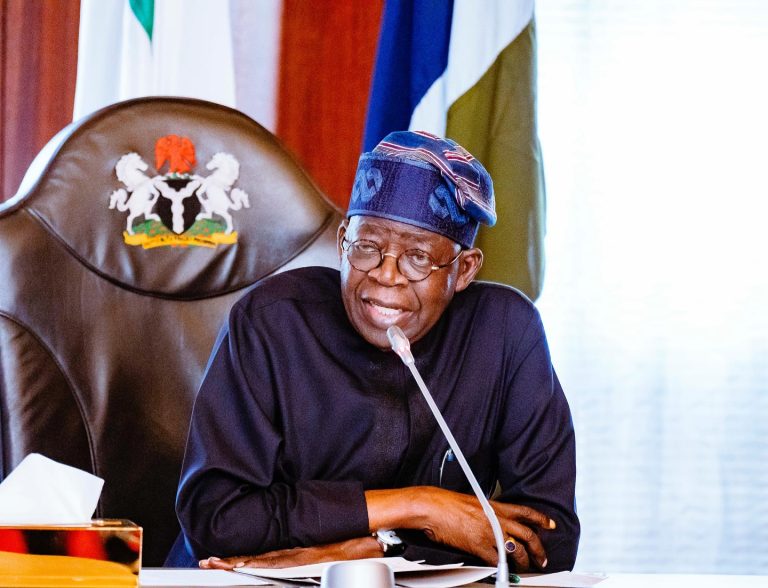
U.S. President Donald Trump’s warning of possible military intervention in Nigeria over alleged attacks on Christians has shaken the country’s political landscape, sparking recriminations between government and opposition figures.
Trump on 1 November declared Nigeria “a country of particular concern,” threatening military action unless President Bola Tinubu’s administration swiftly halted assaults by jihadist groups.
The Nigerian government dismissed the remarks as an affront to its sovereignty but expressed willingness to cooperate with Washington in tackling violent extremism. Officials insisted the administration was committed to defeating jihadist groups responsible for years of bloodshed in northern and central regions.
Political blame game
The controversy has reignited political divisions, with government loyalists accusing the opposition of weaponising the issue to undermine Tinubu ahead of the 2027 election.
“In 2015, under (President Goodluck) Jonathan, people capitalised on these kinds of things to take over power,” said Nyesom Wike, Minister of the Federal Capital Territory and a close Tinubu ally, on Channels Television. “It’s very obvious that the opposition is fuelling this Christian genocide in Nigeria.”
Critics countered that Tinubu’s own All Progressives Congress had used similar tactics in 2015, citing the outcry over Boko Haram’s 2014 abduction of more than 270 schoolgirls from the Christian town of Chibok. They also recalled accusations that former President Muhammadu Buhari’s government tolerated, or even enabled, attacks on Christian communities.
Tinubu’s Muslim-Muslim ticket – a rare departure from Nigeria’s traditional religious balance in presidential pairings – has further amplified accusations of bias. His electoral victory relied on an alliance spanning his Yoruba-dominated southwest and the mainly Muslim north, reinforcing perceptions of marginalisation among southern Christians.
Religious tensions and U.S. spotlight
The latest controversy was triggered by attacks in Benue, Plateau, and Kaduna states, where hundreds of Christians were reportedly killed by suspected jihadists and Fulani militias. On 12 March, Nigerian Christian leaders testified before the U.S. House Foreign Affairs Subcommittee on Africa, chaired by Republican Chris Smith, detailing what they called systematic assaults on Christian communities.
Their testimonies helped frame U.S. congressional discourse linking Nigeria’s crisis to alleged religious persecution – often raised in debates about Israel’s actions in Gaza. Trump’s intervention has therefore drawn international attention to Nigeria’s internal fault lines.
Among those cheering Trump’s stance is Nnamdi Kanu, the detained leader of the Indigenous People of Biafra (IPOB), who has long sought international backing for Nigeria’s Christian minorities. Kanu, abducted from Kenya in 2022, continues to face treason charges despite a Court of Appeal ruling that his rendition was illegal.
Trump’s earlier popularity among Nigerian Pentecostal Christians – many of whom supported him during his 2016 campaign – adds another layer to the controversy. His remarks have revived hopes among some groups for U.S. protection while stoking anxiety within Tinubu’s camp that any foreign intervention could destabilise Nigeria’s delicate political balance.
Analysts warn that Tinubu faces a dilemma: acting decisively against jihadists risks alienating his northern Muslim base, while inaction could invite U.S. reprisals and deepen domestic unrest ahead of 2027.